
What if you could glide alongside a prehistoric sea cow in a corner of the world where the ocean still feels like a well-kept secret? You probably know that finding truly pristine diving in Southeast Asia is becoming harder; it’s frustrating to plan a trip only to be met by murky water or empty reefs. If you’re searching for the most vibrant Con Dao marine life, it’s natural to feel uncertain about the best time to visit or worry about missing the migratory windows for the area’s most iconic residents.
This guide, brought to you by Amadive Con Dao Dive Center, ensures you won’t leave your encounter to chance. We’ll show you exactly how to witness the breathtaking biodiversity of this underwater sanctuary, from the protected nesting grounds of green sea turtles to the elusive dugongs that graze in sun-drenched seagrass meadows. We’ll explore the specific months for crystal-clear visibility, provide a checklist of must-see species, and help you select a sustainable operator so you can explore these pristine waters with confidence and respect.
Key Takeaways
- Understand why the archipelago’s status as a National Park makes it the premier destination for observing Con Dao marine life in its most natural state.
- Learn to distinguish between the vibrant coral “rainforests” and the essential seagrass meadows that support the region’s rarest inhabitants.
- Identify the peak months for underwater visibility and discover the specific window for witnessing the magical green sea turtle nesting season.
- Gain the confidence to choose a sustainable dive operator that prioritizes marine education and reef preservation during every underwater excursion.
Why Con Dao is the Crown Jewel of Vietnam Marine Life
Imagine descending into water so clear it feels like liquid glass. While many coastal areas in Vietnam have struggled with over-development, the Con Dao archipelago remains a vibrant exception. It’s the only place in the country where the ocean truly breathes as it did centuries ago. This isn’t by accident. The archipelago’s status as a top-tier Marine Protected Area (MPA) within the Con Dao National Park ensures that every reef, seagrass bed, and rocky outcrop is shielded from the pressures of modern industry. This protection makes Con Dao marine life the most robust and diverse in the region.
A Sanctuary Under National Protection
The preservation of this underwater world is rooted in a robust framework supported by the World Bank’s marine protected area system. Unlike other popular tourist spots, Con Dao enforces strict regulations that limit boat traffic and prohibit large-scale commercial fishing within its boundaries. These rules keep the reefs in a primitive state. Because tourism is carefully managed, the habitats remain undisturbed, allowing delicate ecosystems to thrive without the stress of overcrowding. It’s a place where nature still holds the upper hand.
Biodiversity by the Numbers
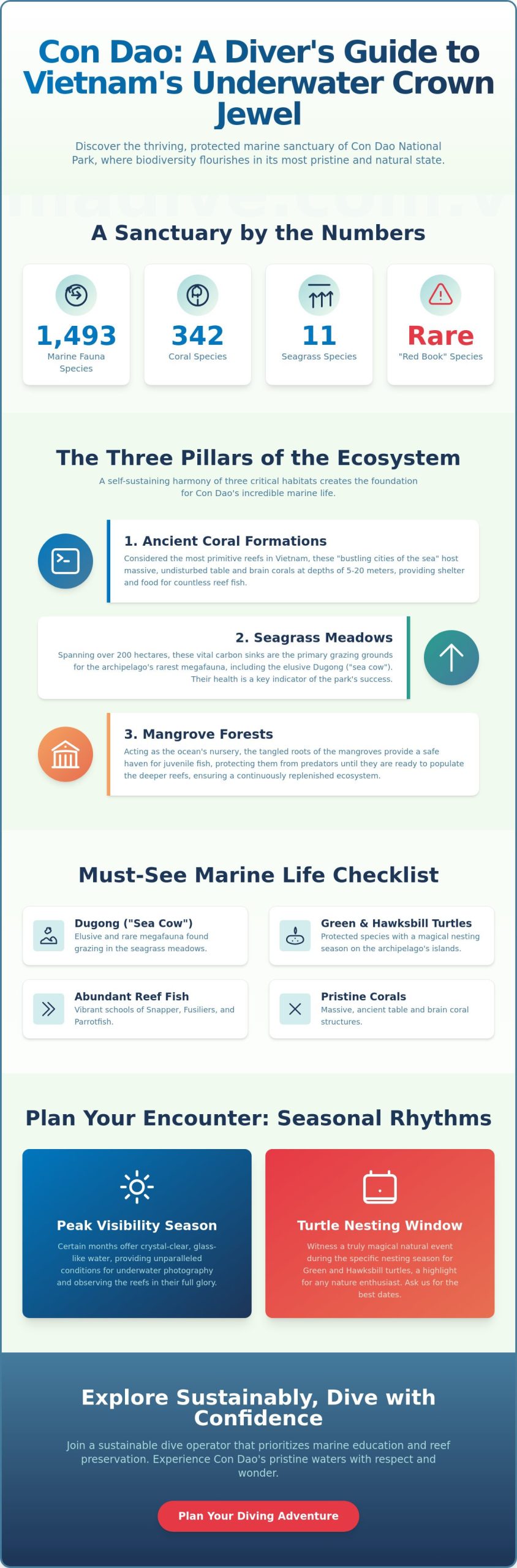
The sheer density of life here is staggering. Scientists have identified 1,493 species of marine fauna within the park’s waters. This incredible variety is anchored by 342 different species of coral, which form the skeletal backbone of the underwater landscape. These aren’t just small patches of growth; they are massive, sprawling colonies covering hundreds of hectares. The archipelago’s unique geographic position, where different oceanic currents converge, creates a nutrient-rich environment that supports a complex food web.
The significance of this ecosystem is highlighted by several key features:
- 11 species of seagrass: These meadows are vital for carbon sequestration and serve as the primary food source for rare megafauna.
- Red Book species: Con Dao is a critical refuge for animals listed in the Vietnam Red Data Book, including the hawksbill turtle and the dugong.
- High biomass: The absence of commercial trawling means that fish populations are not just diverse, but abundant.
If you’ve dived elsewhere in Vietnam, you’ll immediately notice the difference. Schools of snapper, fusiliers, and parrotfish move with a confidence that only comes from living in a true sanctuary. This lack of human interference allows Con Dao marine life to flourish in a way that is increasingly rare in Southeast Asia. It’s a rare opportunity to observe the ocean in its most honest, unfiltered form.
The Three Pillars of the Underwater Ecosystem
The health of this archipelago doesn’t rely on just one habitat. It’s a delicate, three-part harmony. Mangrove forests, seagrass meadows, and coral reefs form a self-sustaining loop that filters the water, protects the coastline, and provides food for a vast array of species. When you explore the waters here, you’re seeing a complete biological circuit in action. The mangroves trap sediment, the seagrass stabilizes the seabed, and the reefs provide the complex structure that houses the majority of Con Dao marine life. It’s a beautifully synchronized system.
The Ancient Coral Formations
Hard and soft corals thrive here at depths ranging from 5 to 20 meters. Because these reefs have been protected for decades, they’re considered the most primitive in Vietnam, meaning they look much like they did before the era of industrial impact. If you’re diving at sites like Hon Cau or Hon Tai, you’ll encounter massive table corals and intricate brain corals that have grown undisturbed for years. These structures aren’t just beautiful; they’re the bustling cities of the sea where reef fish find shelter and food. To help you plan which locations to explore, our guide to the best dive sites in Con Dao breaks down each location by depth, current, and the marine life you’re most likely to encounter.
Seagrass: The Secret to Megafauna
Beyond the colorful reefs lie the 200-hectare seagrass beds. These meadows are more than just greenery; they’re vital carbon sinks and the primary grazing grounds for the archipelago’s rarest residents. This commitment to habitat health is why the area was recently recognized on the IUCN Green List, a testament to the park’s global conservation standing. These meadows are where the elusive dugong, or “sea cow,” comes to feed. If the seagrass is healthy, the megafauna returns, making these plains a critical indicator of the park’s overall success.
The third pillar, the mangrove forests, acts as the ocean’s nursery. Juvenile fish hide among the tangled roots, protected from larger predators until they’re strong enough to head out to the deeper reefs. This connection ensures that the Con Dao marine life you observe is constantly replenished by new generations. Without these three habitats working together, the ecosystem would quickly lose its balance. If you’re ready to see these pillars for yourself, joining a daily scuba diving trip is the best way to witness the interaction between these habitats firsthand.
Iconic Marine Species: What to Look For Underwater
When you tilt your mask downward into the blue, the sheer variety of life can be overwhelming. Con Dao isn’t just about the scenery; it’s about the intimate encounters. You’ll find yourself sharing the water with creatures that have vanished from much of the Vietnamese coastline. This is the heart of Con Dao marine life, where every dive feels like a private audience with the ocean’s most celebrated residents. Whether it’s the slow blink of a turtle or the shimmer of a passing ray, these moments stay with you long after you’ve dried off.
The Turtle Capital of Vietnam
As the most significant nesting site in the country, the archipelago is synonymous with Green Sea Turtles and Hawksbills. Gliding alongside a resting Green Turtle is a lesson in tranquility. They move with an effortless grace that makes even the most experienced diver pause in wonder. You’ll often find them grazing near the reefs or resting under coral overhangs. Conservation here is a community effort. By choosing responsible operators and maintaining a respectful distance, you’re directly supporting the protection of these ancient voyagers.
Rare Encounters: Dugongs and Beyond
Then there’s the legend of the archipelago: the dugong. While sightings are rare and truly a once-in-a-lifetime event, the possibility keeps every diver’s eyes peeled on the horizon. These gentle mammals require shallow, sheltered waters with high-density seagrass beds to satisfy their strictly herbivorous diet. If you’re lucky enough to spot one, you’re witnessing one of the most endangered species in Southeast Asia. Beyond the dugongs, the reef hierarchy is punctuated by Giant Moray Eels. These impressive predators often peer out from rocky crevices, their rhythmic breathing a reminder of the reef’s steady pulse.
Don’t forget to look toward the edges of the reef where the blue deepens. You might spot the sleek silhouette of a Blacktip Reef Shark patrolling the perimeter. They’re shy, often darting away before you can get close. On the sandy bottom, keep an eye out for Marbled Rays or Blue-spotted Ribbontail Rays partially buried and waiting for the tide to turn. If you prefer the smaller details, the reefs are home to a treasure trove of macro marvels:
- Nudibranchs: These “sea slugs” appear in neon patterns that defy logic.
- Pipefish: You’ll need a keen eye to find these masters of camouflage hiding in the seagrass.
- Ornate Ghost Pipefish: Occasionally found blending perfectly with crinoids or sponges.
Whether you’re hunting for tiny neon snails or hoping for a glimpse of a shark, the diversity here ensures no two dives are ever the same. The ecosystem’s health is reflected in the confidence of its inhabitants, making every excursion a vibrant window into a thriving world.
Seasonal Rhythms: The Best Time for Marine Encounters
The ocean doesn’t follow a human calendar. Instead, it moves to the rhythm of the monsoons and the tides. To experience the full spectrum of Con Dao marine life, timing is everything. While the archipelago is beautiful year-round, the clarity of the water and the presence of certain species shift dramatically between the seasons. Understanding these patterns allows you to plan a trip that aligns with your specific underwater goals, whether that’s photographing tiny nudibranchs or watching a green sea turtle glide through the blue.
The dry season, stretching from March to September, is widely considered the golden window for divers. During these months, the seas are typically calm and the winds are light. Visibility can soar to 30 meters or more, creating that “aquarium” feel that every diver dreams of. If you visit between May and October, you’ll also be in the heart of the turtle nesting season. This is a magical time when mother turtles return to the beaches where they were born, and lucky divers might spot hatchlings making their first brave swim toward the open ocean.
Monthly Wildlife Calendar
- March – May: These months offer the calmest surface conditions. It’s the ideal time for macro photography, as the lack of surge makes it easier to spot and focus on tiny pipefish and colorful sea slugs.
- June – August: This is peak turtle season. Water temperatures are at their warmest, often reaching 29 or 30 degrees Celsius. It’s the best time for long, comfortable dives.
- September – November: As the seasons transition, you’ll often see a shift in the currents. This movement of water frequently brings in larger schools of pelagic fish, adding a sense of scale to the reefs.
Understanding Visibility and Currents
The “windy season” begins in October and lasts through February. During this time, strong Northeast monsoons can stir up sediment and create choppy surface conditions. However, the archipelago’s unique shape means there’s almost always a sheltered side. While visibility might drop to 10 or 15 meters in some spots, the nutrient-rich water often attracts different life forms. If you’re planning a trip during these months, it’s essential to work with local experts who know which hidden bays remain calm and clear.
Tides also play a crucial role, especially when you’re hoping to explore the seagrass beds. Clear water over the meadows is best achieved during high tide when the surge is minimal. If you want to maximize your chances of a world-class encounter, booking a daily scuba diving trip with a team that understands these local nuances is the smartest move you can make. They’ll ensure you’re at the right site at the exact moment the conditions align.
Sustainable Exploration with Amadive Con Dao
You’ve discovered the incredible diversity of the archipelago, from the prehistoric silhouettes of dugongs to the neon pulses of nudibranchs. But observing this beauty is only half the journey. Protecting the delicate balance of Con Dao marine life is a shared responsibility that begins the moment you step onto the boat. Sustainable exploration isn’t a passive act; it’s a commitment to leaving the reefs exactly as you found them. Here at Amadive Con Dao Dive Center, we believe that every diver should act as a guardian of the sanctuary they’ve come to admire.
PADI Courses and Conservation
Building a foundation for responsible diving starts with proper training. A PADI Open Water Diver Course provides the essential skills to navigate the underwater world safely. One of the most critical components of this training is buoyancy control. If you can hover effortlessly, you avoid damaging the fragile coral structures that take decades to grow. For experienced enthusiasts, the PADI Advanced Open Water Diver program offers a deeper dive into environmental awareness. Better buoyancy doesn’t just protect the reef; it leads to longer, calmer wildlife encounters because you’re moving with the water rather than against it.
Our instructors integrate marine education into every Daily Scuba Diving (2 Dives) trip. We help you identify the species we’ve discussed while enforcing a strict “No Touch” policy. It’s about observing the natural behavior of animals without causing them stress. This professional guidance is especially valuable for spotting camouflaged macro life that an untrained eye might easily miss. When you dive with us, you’re learning to see the ocean through the eyes of an expert guide who knows every crevice of these reefs.
Joining the Mission
Beyond individual skills, we invite you to join a larger mission of stewardship. We encourage our community to engage in citizen science by documenting sightings of rare species or reporting the health of specific reef patches. These efforts provide valuable data to local conservationists and help maintain the pristine condition of the National Park. By choosing a sustainable operator, you’re supporting a business model that prioritizes the environment over high-volume turnover. This approach ensures that the local community benefits from tourism without sacrificing the natural resources that make the islands so special. If you’re ready to make your mark as an eco-conscious explorer, Book your Con Dao diving adventure with Amadive Con Dao Dive Center today!
Begin Your Journey into the Sanctuary
The vibrant waters of the archipelago offer a rare glimpse into an ocean that remains wild and resilient. You now understand that the health of Con Dao marine life depends on the delicate harmony between its ancient corals and sun-drenched seagrass meadows. Whether you’re hoping to glide alongside a nesting green sea turtle or spot a shy reef shark on the horizon, success lies in respecting the ocean’s seasonal rhythms. This underwater world is a gift, and exploring it requires a balance of adventurous spirit and deep respect.
Our team is ready to be your guide to this hidden realm. By focusing on small group sizes and employing PADI-certified expert guides, we ensure your encounters are both personal and protective. We’re dedicated to marine conservation and education, ensuring every dive supports the sanctuary’s future. If you’re ready to immerse yourself in Vietnam’s most protected ecosystem, Explore Con Dao’s Marine Wonders with Amadive. The reef is breathing, and it’s waiting for you to discover its secrets.
Frequently Asked Questions
What is the best month to see sea turtles in Con Dao?
The best months to see sea turtles in the archipelago are between May and October. This period marks the peak nesting season, with June to August offering the highest frequency of mother turtles returning to the beaches and hatchlings making their first journey to the sea. During these months, the calm waters provide excellent visibility for observing these gentle residents in their natural habitat.
Can you see dugongs while scuba diving in Con Dao?
While it’s possible to see dugongs while scuba diving, sightings are extremely rare and considered a once-in-a-lifetime event. These shy mammals primarily inhabit shallow, sheltered seagrass meadows where they graze on specific aquatic plants. Most sightings occur in the quietest areas of the national park, away from heavy boat traffic, making every encounter a profound moment of connection with nature.
Are there sharks in the Con Dao marine park?
Yes, the marine park is home to several shark species, most commonly the blacktip reef shark. These sleek predators are generally shy and pose no threat to divers, often patrolling the edges of the reefs in search of small fish. Seeing them is a sign of a healthy ecosystem, as they play a vital role in maintaining the balance of the local underwater world.
What is the average water temperature for diving in Vietnam’s archipelago?
The average water temperature typically ranges from 27°C to 30°C during the peak diving season. This warmth makes for very comfortable conditions, often requiring only a thin 3mm wetsuit or even just a rash guard. In the cooler months from December to February, temperatures might dip slightly, but the water remains inviting for those eager to explore the vibrant Con Dao marine life.
Do I need a permit to dive in the Con Dao National Park?
You do need a permit to dive within the boundaries of the National Park, but this is almost always handled by your dive operator. A standard park entry fee is usually included in your trip price. These funds are essential for the ongoing protection and management of the marine sanctuary, ensuring the reefs remain pristine for generations of divers to come.
Is snorkeling as good as diving for seeing marine life in Con Dao?
Snorkeling is excellent for viewing shallow coral gardens and surface-dwelling species like sea turtles, but scuba diving offers a more immersive look at the Con Dao marine life. Diving allows you to reach the deeper reef structures where macro life like nudibranchs and pipefish hide. It also provides the tranquility needed to observe resident fish without the constant need to surface for air.
What makes the coral reefs in Con Dao different from other parts of Vietnam?
Con Dao’s coral reefs are unique because they are among the most primitive and well-preserved in Vietnam. Due to the archipelago’s remote location and strict National Park regulations, the coral structures have grown into massive, complex colonies that are rare elsewhere. The high density of over 340 coral species creates a remarkably resilient ecosystem that supports a greater biomass of fish than many other regional dive spots.
What should I bring for a day of marine exploration in Con Dao?
For a day of marine exploration, you should bring reef-safe sunscreen, a towel, and your certification card if you’re a qualified diver. It’s also helpful to have a dry bag for your personal items and a reusable water bottle to minimize plastic waste. Most importantly, bring a spirit of adventure and a deep respect for the fragile underwater environment you’re about to enter.