
What if the secret to finding the most vibrant coral in Vietnam isn’t just about where you dive, but exactly when you drop into the water? Many divers arrive in the archipelago expecting year-round glass-like conditions, only to discover that the 16 islands follow a strict seasonal rhythm that dictates visibility and access. It’s natural to feel a sense of uncertainty regarding coral health or worry about choosing a location that might be too demanding for your experience level. You want to ensure your time beneath the surface is spent observing thriving marine life rather than fighting unexpected currents.
This guide simplifies your planning by curating the best dive sites Con Dao offers for every skill level, from shallow coral gardens to deeper, dramatic pinnacles. We’ll explore how the monsoon winds shift the “sweet spots” across the Marine Protected Area and provide the clarity you need to choose the right guided trip for your abilities. By the end of this article, you’ll understand the seasonal nuances of the archipelago and feel ready to glide through some of the most pristine waters in Southeast Asia with total confidence.
Key Takeaways
- Understand the ecological significance of the Con Dao National Park and how its 16 islands provide a diverse sanctuary for rare marine species.
- Identify the best dive sites Con Dao offers for novice divers, focusing on shallow coral gardens with exceptional light penetration and minimal currents.
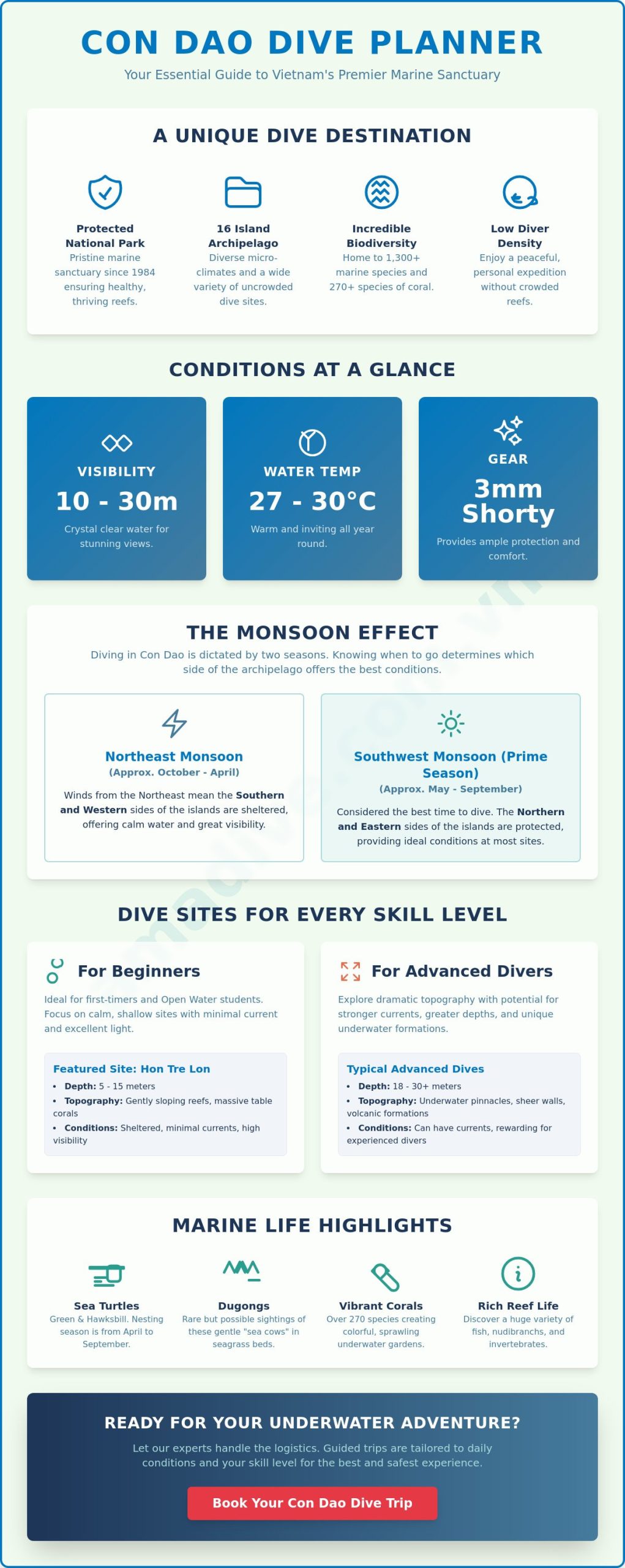
- Learn how to navigate the archipelago’s more dramatic underwater walls and volcanic formations designed for those seeking advanced depth and movement.
- Master the seasonal transition between the Northeast and Southwest monsoons to ensure you always dive on the most sheltered and clear side of the islands.
- Discover the logistical advantages of a guided two-tank trip, where expert site selection is tailored to both daily weather patterns and your personal experience level.
Exploring the Marine Sanctuary: Why Con Dao Diving is Unique
Imagine sinking into a world where time seems to slow down and the only sound is the rhythmic pulse of your own breathing. This is the reality within the Côn Đảo National Park, a protected marine sanctuary that has been under strict conservation since 1984. Spanning an archipelago of 16 distinct islands, this region offers a rare glimpse into Vietnam’s most preserved aquatic ecosystems. Because each island creates its own subtle micro-climate, the best dive sites Con Dao offers are remarkably varied, ranging from sheltered bays to current-swept pinnacles.
Unlike the bustling underwater traffic often found in some more frequented dive locations, diving here feels like a private expedition. You won’t find hundreds of divers crowding a single reef. Instead, you’ll encounter a peaceful environment where over 1,300 marine species thrive in relative solitude. This low diver density ensures that the reefs remain healthy and the fish stay curious rather than skittish. It’s a place where stewardship and adventure go hand in hand.
To better understand the beauty of these underwater landscapes, watch this helpful video:
The Biodiversity of Vietnam’s Last Frontier
Con Dao is widely considered Vietnam’s last frontier for marine life enthusiasts. Across the archipelago, you can observe more than 270 species of coral, creating a kaleidoscope of textures and colors that shift with the light. These vibrant gardens serve as critical nesting grounds for both Green and Hawksbill turtles. During the nesting season from April to September, the chance of seeing these ancient travelers is high. If you’re truly fortunate, you might even spot a Dugong grazing in the lush seagrass beds. These rare marine mammals are a testament to the park’s successful preservation efforts.
Visibility and Conditions: What to Expect
Crystal clear water is the hallmark of a great trip, and the best dive sites Con Dao features rarely disappoint. Depending on the season and tide, visibility typically ranges from 10 to a staggering 30 meters. The water remains warm and inviting, usually hovering between 27 and 30°C. Most divers find that a 3mm shorty provides plenty of protection for multiple dives throughout the day. To learn more about the specific creatures you might meet, check out our Con Dao marine life guide. Whether you’re gliding over a reef or observing a tiny nudibranch, the clarity of these waters makes every detail pop.
Gentle Reefs and Vibrant Gardens: Top Sites for Beginners
Entering the water for the first time can feel like stepping into a silent, sun-drenched dream. For those new to the sport, the Con Dao Marine Protected Area provides an ideal classroom where the elements align to create a stress-free experience. Finding the best dive sites Con Dao offers for those just starting their journey means looking for three specific things: shallow depths, minimal current, and high light penetration. These “nursery” reefs are teeming with juvenile life, offering a gentle introduction where you can focus on your buoyancy while surrounded by a kaleidoscope of color.
Safety remains our cornerstone during every excursion. Our guides manage small groups with a watchful eye, ensuring that every participant feels secure and supported. These calm conditions are perfect for completing a PADI Open Water Diver Course or simply trying a Discover Scuba Diving session at some of the best dive sites Con Dao provides for beginners. In these protected bays, the water acts as a warm embrace, allowing you to observe the intricate dance of the reef without the distraction of heavy swells or strong pulls.
Hon Tre Lon (Big Bamboo Island)
Hon Tre Lon is a favorite for its stunning, sloping reef topography. Massive table corals, some several meters wide, dominate the landscape and provide shelter for a bustling community of reef residents. As you glide between 5 and 15 meters, you’ll likely spot bright Parrotfish crunching on coral or elegant Butterflyfish darting through the dappled light. It’s a photographer’s paradise because the shallow depth ensures that red and orange hues remain vibrant even without external strobes. Occasionally, a curious blacktip reef shark might cruise past the edge of the reef, adding a dash of excitement to your serene exploration.
Hon Cau: The Turtle Sanctuary
If you’re looking for a truly meditative experience, Hon Cau is the place to be. This site features soft coral gardens and clear sandy patches that are perfect for practicing basic skills. It is famously known as a turtle sanctuary, where the probability of seeing juvenile Green or Hawksbill turtles foraging in the shallows is exceptionally high. There’s a profound sense of peace here. Watching a young turtle effortlessly navigate the water encourages a similar sense of presence in your own dive. The bay is naturally shielded from the wind, making the surface as calm as a lake and the underwater world feel like a private sanctuary.
Walls, Currents, and Formations: Advanced Dive Sites
While the inner bays offer tranquility, the outer edges of the archipelago demand a higher degree of precision and awareness. Defining “Advanced” diving in this region isn’t just about reaching deeper profiles between 18 and 30 meters. It’s about mastering the art of movement within moderate currents that sweep along the archipelago’s unique rock formations and dramatic drop-offs. For those seeking a more kinetic experience, the best dive sites Con Dao features on its perimeter provide an exhilarating shift from the gentle nursery reefs found closer to shore.
Exploring these exposed locations requires a solid foundation in buoyancy and air management. The thrill of a drift dive along the National Park’s outer boundaries is unmatched, but it necessitates the skills gained through a PADI Advanced Open Water certification. At these depths, the environment changes. The light becomes a moody indigo, and the marine life grows larger and more assertive. You’re no longer just an observer; you’re a part of the ocean’s powerful flow.
Hon Bay Canh: The Current-Rich Wall
Hon Bay Canh is frequently cited as one of the best dive sites Con Dao offers for those who enjoy the sensation of underwater flight. Here, dramatic rock faces plunge into the deeper blue, encrusted with a rich tapestry of sponges and gorgonian fans. As you glide weightlessly with the current along this coral-encrusted wall, you’ll witness the sheer scale of the marine sanctuary. Large pelagics often cruise the blue water just off the wall, while silver schools of Barracuda hang motionless in the stream. Look closely into the deeper crevices to find Giant Moray Eels watching the world go by with ancient, unblinking eyes.
The Pinnacles and Deep Formations
Submerged rock spires rise like silent sentinels from the sandy floor, attracting larger predators and creating vibrant hubs of activity. These pinnacles are magnets for schools of Trevally and hunting Jacks that dart through the water with silver precision. While the big fish capture your initial gaze, the crevices of these formations hold a secret world of macro treasures. If you have the patience to look, you can find vibrant Nudibranchs and the elusive Ornate Ghost Pipefish hidden among the swaying soft corals. Because these corals are incredibly delicate, maintaining excellent buoyancy control is vital to ensure we leave these underwater cathedrals exactly as we found them.
The Seasonal Map: When to Dive Which Site
Success beneath the waves depends largely on understanding the wind’s direction. Because the archipelago consists of 16 islands, there’s almost always a sheltered corner to be found, but the accessibility of specific locations shifts with the seasons. Choosing the best dive sites Con Dao has to offer requires a strategic look at the two primary monsoon cycles. While some believe that the rainy season automatically means poor visibility, the truth is more nuanced. Rain itself rarely affects the clarity of the water; it’s the wind and swell that stir up sediment. By following the seasonal map, you can ensure your descent is as clear and calm as possible.
Planning your trip during the transition months of April and October can be particularly rewarding. During these periods, the winds are often light and variable as the monsoons prepare to switch. This can lead to glass-like surface conditions and exceptional visibility across the entire National Park. If you’re ready to see these conditions for yourself, check our daily schedule to find the best window for your next underwater adventure.
March to September: The Golden Window
This period represents the peak of the diving year, offering calm seas and visibility that frequently exceeds 20 meters. With the Southwest monsoon providing gentle breezes, we can easily reach the outer islands that remain inaccessible during the winter months. This is the prime time for scuba diving Con Dao, as the water is warm and the surface is typically flat. These months also coincide with the turtle nesting season, significantly increasing your chances of spotting Green turtles during your surface intervals or while gliding over the reefs. It’s a time of abundance where every site, from the shallowest garden to the deepest pinnacle, is pulsing with life.
October to February: The Sheltered Secrets
When the Northeast monsoon arrives, it brings stronger winds and cooler air to the islands. While many of the eastern sites become too rough for comfortable diving, the western-facing bays transform into sheltered retreats. These “winter” sites are often shallower and feature more rugged, rocky topography compared to the sprawling coral gardens of the south. While you might manage slightly lower visibility than in the summer, these months offer a more exclusive experience with very few other boats on the water. The focus shifts toward macro life; it’s the best time to slow down and search for nudibranchs, pipefish, and tiny crustaceans hiding among the stones. Even during the windier months, the best dive sites Con Dao provides on its leeward side remain a sanctuary for those who know where to look.
Planning Your Con Dao Dive Trip with Amadive Con Dao Dive Center
We don’t just pick a spot on a map and hope for the best. Our team monitors wind patterns and tidal movements in real time to ensure you visit the best dive sites Con Dao offers on any given day. This careful selection process balances the current weather conditions with the experience level of everyone on board. It’s a personalized approach that transforms a standard outing into a curated underwater expedition. To understand exactly what to expect from a daily dive trip Con Dao professionals lead through the marine sanctuary, you can explore the full rhythm, requirements, and rewards of a guided journey through these pristine waters. Whether you
Experience the Magic of Vietnam’s Marine Sanctuary
The 16 islands of this archipelago offer a rare opportunity to witness marine life in its most natural state. By understanding the seasonal shifts between the monsoons, you can find the best dive sites Con Dao provides, whether you’re gliding through shallow coral gardens or drifting along dramatic deep-sea walls. From the turtle sanctuaries of the inner bays to the current-swept pinnacles of the outer park, every descent is an invitation to discover something new. You now have the knowledge to navigate these waters with confidence, matching your skill level to the perfect underwater landscape.
At Amadive, we’re proud to be a PADI Certified Dive Center and a dedicated eco-friendly National Park operator. We believe that the best experiences happen in small, intimate groups, which is why we maintain a maximum ratio of four divers per guide. This ensures your safety and maximizes your enjoyment while protecting the delicate reefs we all love. Are you ready to take the plunge? Book Your Con Dao Dive Adventure with Amadive Today and let us guide you through the secrets of this pristine wilderness. The vibrant world beneath the surface is waiting for your arrival.
Frequently Asked Questions
What is the best month for diving in Con Dao?
The peak season for exploring the underwater world runs from March to September. During these months, the sea is typically flat and visibility often exceeds 20 meters, creating ideal conditions for reaching the outer islands. This window also coincides with the sea turtle nesting season, offering a high probability of sightings during your dives.
Can beginners dive in the Con Dao archipelago?
Yes, the archipelago is an excellent destination for those new to the sport. Many of the inner bays offer shallow reefs between 5 and 15 meters with very gentle currents and high light penetration. These conditions are perfect for a Discover Scuba Diving session or completing your PADI Open Water Diver course in a safe, controlled environment.
What kind of marine life can I see while diving in Con Dao?
You can observe an incredible diversity of over 1,300 marine species, including Green and Hawksbill turtles which frequent the area for nesting. The reefs are home to more than 270 species of coral, schools of Barracuda, and Giant Moray Eels. If you’re lucky, you might even spot the elusive Dugong grazing in the seagrass beds within the National Park boundaries.
Are there any shipwrecks to dive in Con Dao?
While the focus is primarily on natural reefs, there are exciting developments regarding artificial reefs in the region. Amadive has submitted a proposal to sink the ‘Sheng Li’, a 52-meter cargo ship, to create a high-end wreck dive site. Currently, most dives focus on the dramatic volcanic rock formations and lush coral gardens that define the archipelago’s topography.
How do I get to Con Dao for a diving trip?
The most efficient way to reach the islands is by taking a short domestic flight from Ho Chi Minh City or Hanoi to Con Dao Airport (VCS). Flights typically take about 45 to 60 minutes and provide the most reliable connection for your scheduled dive trips. Alternatively, high-speed ferries operate from Vung Tau and Soc Trang for those who prefer a sea crossing.
Is a permit required to dive in the Con Dao National Park?
Yes, all visitors must pay a National Park entrance fee, which is currently 60,000 VND for adults. When you book a trip with us, we handle all the necessary permits and logistics required by the park authorities. This ensures that your visit remains compliant with local conservation regulations while supporting the ongoing protection of the marine sanctuary.
What is the water temperature and visibility like?
The water remains warm and inviting throughout the year, typically ranging between 27°C and 30°C. Visibility is highly seasonal; it reaches its peak of up to 30 meters between March and September. Even during the windier months, we can usually find sheltered spots among the best dive sites Con Dao offers where visibility remains clear enough for enjoyable exploration.
Does Amadive offer snorkeling for non-divers on the same boat?
We certainly do, as our snorkeling and island hopping trips often share the same vessel as our scuba excursions. This arrangement is perfect for families or couples with different experience levels who still want to enjoy a day out on the water together. While the divers are below, snorkelers can explore the vibrant surface reefs under the guidance of our professional crew.