
If you think booking a flight is the only way to ensure you reach the dive boat on time, you might be overlooking the most scenic and dependable routes of 2026. Reaching this remote archipelago can feel like a logistical puzzle, especially when flight seats vanish weeks in advance or the sea mist rolls into the mainland ports. You want to spend your time breathing in the salt air and observing sea turtles, not refreshing a booking page or worrying about sea sickness on a long crossing. Understanding how to get to Con Dao Vietnam is the first step in your transition from the city’s energy to the island’s marine tranquility.
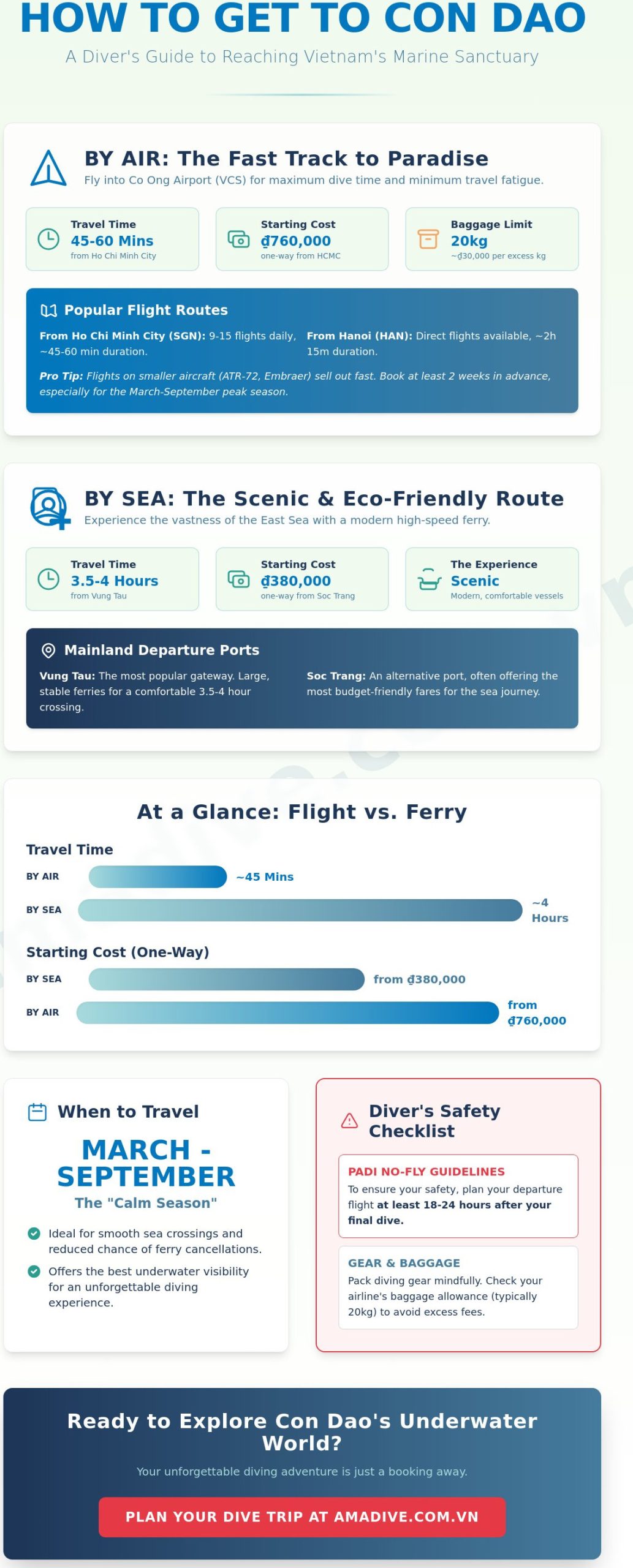
This guide provides a clear map for your journey, whether you prefer the 45 minute flight from Ho Chi Minh City starting around ₫760,000 or the high-speed ferry from Soc Trang for approximately ₫380,000. If you choose the air, you gain speed; if you choose the sea, you witness the vast emerald horizon that defines this sanctuary. We will explore the trade-offs between flight availability and ferry reliability so you can book your diving itinerary with absolute confidence. From navigating the 15 daily flights to choosing the right departure port, you’ll find everything needed to reach Con Son island smoothly.
Key Takeaways
- Master the logistics of flying into Co Ong Airport (VCS) to maximize your time in the water and minimize travel fatigue.
- Compare the three main mainland ports to find the most reliable high-speed boat crossing based on your departure city and budget.
- Learn why the “Calm Season” from March to September is the essential window for smooth sea crossings and optimal underwater visibility.
- Discover how to get to Con Dao Vietnam while strictly adhering to PADI no-fly guidelines to ensure your safety after a day of deep-sea exploration.
- Navigate the final leg of your journey from Ben Dam Port or the airport to the local dive center with our island-specific transport tips.
Navigating the Skies: Flying to Con Dao Airport (VCS)
Co Ong Airport (VCS) serves as the primary bridge between the bustling mainland and the quiet sanctuary of the archipelago. Tucked away on the northern tip of Con Son, the landing itself offers a breathtaking preview of the turquoise waters you’ll soon be exploring. For travelers wondering how to get to Con Dao Vietnam with efficiency in mind, the sky is undoubtedly the most reliable path. While the ferry offers its own rugged charm, flying saves you nearly five hours of travel time. This allows you to settle into the island rhythm and prepare your gear for a morning dive without the lingering fatigue of a long sea crossing.
The airport’s short runway historically limited the types of aircraft that could land here, creating a sense of exclusivity that persists today. You’ll likely board an ATR-72 turboprop or a modern Embraer jet. These smaller planes offer an intimate flying experience, though they do come with stricter baggage constraints than larger international flights. Standard allowance is typically 20 kilograms. If you’re bringing your own regulators or BCD, plan your packing carefully. Excess weight is usually charged at approximately ₫30,000 per kilogram. Because these aircraft have limited seating, flights sell out rapidly. During the peak season from March to September, booking your seat at least two weeks in advance is a necessity rather than a suggestion.
Direct Routes from Ho Chi Minh City and Hanoi
The most frequent connection is from Ho Chi Minh City’s Tan Son Nhat International Airport (SGN). With 9 to 15 daily flights operated by Vietnam Airlines and its partner VASCO, you can easily find a time that fits your itinerary. The flight lasts roughly 45 to 60 minutes; it’s a short hop that feels like a transition between two different worlds. For those coming from the north, direct flights from Hanoi (HAN) take about 2 hours and 15 minutes. This direct link has transformed the journey for northern divers, removing the need for an exhausting layover in the south and getting you to the marine park much faster.
Connecting Flights and Regional Hubs
If your journey begins in Da Nang, Nha Trang, or other regional hubs, you’ll likely transition through Ho Chi Minh City. Managing these layovers requires a bit of foresight. It’s best to ensure you have at least three hours between your regional arrival and your VCS departure to account for baggage collection and the transfer between domestic terminals. If your regional flight faces a delay, don’t panic. Most carriers are familiar with the tight scheduling of Con Dao routes. They can often assist in rebooking, though the limited daily seats mean you might have to wait for the next available aircraft to carry you toward the islands.
The Scenic Route: Fast Ferries and Sea Crossings
While flying offers speed, choosing the sea route is an invitation to witness the vastness of the East Sea. The rise of high-speed ‘Express’ boats has transformed the journey, making the archipelago more accessible than ever. For those considering how to get to Con Dao Vietnam while minimizing their carbon footprint, the ferry is the true eco-steward’s choice. Gliding across the water allows you to appreciate the isolation and pristine beauty of the islands before you even step onto the pier. It’s this unique blend of rugged nature and serene isolation that earned the islands a spot in the New York Times’ “52 Places to Love”. The sensory experience of the salt spray and the shifting shades of blue sets a meditative tone for your upcoming dives.
The transition from the mainland’s energy to the island’s tranquility is palpable as the coastline fades. Modern ferries have replaced the slow, overnight wooden boats of the past, offering air-conditioned cabins and comfortable seating. Choosing the boat isn’t just about saving money; it’s about the rhythm of the journey. You’ll watch the water change from the silt-heavy browns of the delta to the deep, crystalline indigo of the marine sanctuary. This gradual approach builds a sense of anticipation that a flight simply can’t replicate.
Departure from Vung Tau: The Professional Choice
Vung Tau remains the most popular mainland gateway for many travelers. The journey typically takes between 3.5 to 4 hours on large, stable vessels like those operated by Phu Quoc Express. These boats are designed for comfort, featuring spacious cabins that help mitigate the effects of sea swells. If you’re coming from Ho Chi Minh City, a quick two-hour limousine bus ride will get you to the Vung Tau express port in time for the daily 8:00 AM departure. Tickets generally range from ₫880,000 to ₫1,130,000. Booking through official online platforms is essential, especially during the summer months when these routes are in high demand.
Departing from the Mekong Delta: Soc Trang and Can Tho
If you prefer the shortest time on the open water, Soc Trang is your best bet. Departing from Tran De Port, the crossing takes only about 2 to 2.5 hours. This route is a favorite for budget-conscious travelers, with tickets priced between ₫380,000 and ₫500,000. For a more immersive experience, some travelers choose to depart from Can Tho. This 4-hour journey allows you to combine the vibrant culture of the Mekong Delta with your island escape. Keep in mind that ferry schedules are highly dependent on sea conditions. During the monsoon seasons, cancellations can happen, so it’s wise to check the weather forecast before finalizing your plans. Once you arrive, you can start your adventure by joining a Daily Scuba Diving (2 Dives) trip to see the reefs firsthand.
Timing Your Journey: Weather and Seasonal Considerations
The ocean’s mood dictates every aspect of your arrival. While modern technology has made the journey easier, the archipelago remains subject to the powerful rhythms of the South China Sea. If you are researching how to get to Con Dao Vietnam, your first priority should be the calendar. The ‘Calm Season’ spans from March to September. During these months, the waters are typically tranquil, allowing the high-speed ferries to maintain their daily schedules with high reliability. This period also aligns with the sea turtle nesting season, as 90% of Vietnam’s sea turtles return to these shores to lay their eggs under the summer moon.
Conversely, the ‘Windy Season’ arrives in October and lingers through February. Strong northeast monsoons can stir up significant swells, often leading to multi-day ferry cancellations. While flights continue to operate during these months, they become the only viable lifeline to the mainland and sell out almost instantly. For those planning a winter escape, booking air travel months in advance is the only way to ensure your spot on the island. Nature always holds the final say in these remote reaches, so understanding these cycles is part of being a responsible and prepared traveler.
Visibility and Sea Conditions for Ocean Enthusiasts
Underwater clarity is a direct reflection of the winds above. In the calm summer months, visibility can reach up to 20 or 30 meters, offering a crystal-clear window into the vibrant coral gardens. If the winds shift and the sea becomes restless, sediment from the seafloor can rise, reducing that clarity significantly. Planning your arrival for the early summer ensures you catch the peak of this transparency. It’s also wise to build at least one ‘buffer day’ into your itinerary. This extra time protects your diving schedule if a sudden squall delays your arrival or if you simply need a day for the silt to settle after a brief storm.
Managing Flight Cancellations Due to Crosswinds
Con Dao’s airport is famous among pilots for its unique geography. Flanked by coastal hills, the runway is susceptible to sudden crosswinds that can occasionally ground the smaller ATR-72 or Embraer aircraft. As noted in this Frommer’s travel guide to Con Dao, travelers should prepare for the possibility of short delays during seasonal transitions. Airlines like Vietnam Airlines are generally efficient at rebooking passengers on the next available flight, but these seats are limited. We always recommend securing travel insurance that specifically covers weather-related travel interruptions. This small step provides professional reassurance, allowing you to focus on the wonder of the islands rather than the logistics of a delay.
The Diver’s Logistical Checklist: No-Fly Times and Gear
Planning how to get to Con Dao Vietnam involves more than just booking a ticket; it requires a deep respect for the physiological demands of the sport. The golden rule of scuba diving is the surface interval before flying. If you’ve spent your days gliding through the marine sanctuary, your body needs time to release residual nitrogen before you ascend to cabin altitude. While PADI guidelines suggest a minimum of 18 hours after multiple dives, we recommend a 24-hour buffer. This conservative approach ensures your safety and allows you to enjoy your final day on the island with total peace of mind. It’s a small investment in your health that pays dividends in comfort during your flight home.
To structure your trip effectively, consider scheduling your final Daily Scuba Diving (2 Dives) session at least one full day before your departure. This timing creates a natural window for your equipment to dry and your body to equalize. Transporting delicate gear like regulators and dive computers requires care. We suggest keeping your computer and regulator first-stage in your carry-on luggage. These sensitive instruments don’t handle the rough movements of cargo holds well, and keeping them close ensures they arrive in the same pristine condition they left in.
Maximizing Your Last Day on the Island
A 24-hour no-fly window isn’t lost time; it’s an opportunity to explore the terrestrial beauty of the archipelago. You can spend your morning hiking through the lush trails of Con Dao National Park or visiting the historical sites that tell the island’s complex story. If you still crave the water, snorkeling is a safe alternative. Since you aren’t breathing compressed air at depth, a final afternoon spent observing the shallow reefs won’t interfere with your flight safety. Afterward, relax at a local cafe in the town center, watching the slow pace of island life while your nitrogen levels safely return to baseline.
Luggage Strategies for Scuba Enthusiasts
Navigating the 20-kilogram weight limit on island flights can be a challenge for divers. If you’re bringing your own BCD and fins, pack them in a padded bag to protect against the tight cargo spaces of the ATR-72 or Embraer aircraft. Many of our guests find that renting high-quality gear at the dive center is a more efficient way to manage their journey. This choice lightens your load and simplifies the logistics of how to get to Con Dao Vietnam. If you do bring your own, wear your heaviest shoes and travel clothes on the plane to save those precious grams for your essential dive kit.
Arrival in Paradise: From the Port to the Dive Center
Stepping off the aircraft or descending the ferry ramp, you’re immediately greeted by the fragrance of salt air and tropical blossoms. The logistical puzzle of how to get to Con Dao Vietnam concludes not with a frantic city rush, but with a gentle immersion into island life. Whether you arrive at the northern Co Ong Airport (VCS) or the southern Ben Dam Port, the small-town infrastructure feels personal and welcoming. You’ll find that the local community takes deep pride in their home. This stewardship is evident in the clean streets and preserved landscapes that surround the main town of Con Son. Your transition from traveler to explorer begins the moment you see the emerald peaks rising above the coastline.
The 15km journey from the airport to the town center takes roughly 20 minutes along a winding coastal road that offers glimpses of hidden bays. A shared minivan is a reliable and cost-effective choice, typically priced at ₫50,000 per person. If you prefer more privacy, a taxi for the same trip usually costs between ₫75,000 and ₫125,000. For those arriving by sea at Ben Dam Port, the 12km drive north to the town provides a similarly scenic introduction to the archipelago’s rugged beauty. This short transit is your time to breathe deeply and leave the mainland’s pace behind.
Island Transportation: Taxis, Electric Buses, and Scooters
Con Dao is committed to preservation, which is why you’ll see a fleet of eco-friendly electric buses gliding through the town. These are perfect for short trips between your accommodation and local cafes. If you seek more independence, renting a scooter for approximately ₫150,000 per day allows you to explore the island’s remote corners at your own pace. We recommend caution on the winding coastal bends, as the stunning views can be a distraction. Always wear a helmet and stay mindful of the occasional wandering cow or the slow-moving local traffic that shares these scenic routes.
Your First Dive: Scheduling Your Orientation
Once you’ve settled into your hotel, your first stop should be the Amadive Con Dao Dive Center. Checking in early allows us to finalize your paperwork and fit your gear without any rush. Whether you’re preparing for a PADI Open Water Diver Course or a Discover Scuba Diving experience, our team will walk you through the itinerary and safety protocols. This orientation is the final bridge between your journey and the aquatic world. We’ll ensure you feel confident and secure before you ever take your first breath underwater. Book your Con Dao dive adventure with Amadive today!
Your Island Sanctuary Awaits
The journey to the archipelago is a transition from the mainland’s rush to the profound stillness of a marine sanctuary. Timing is everything. By choosing the calm window between March and September and respecting the 24-hour no-fly interval, you ensure your adventure is both seamless and safe. Understanding how to get to Con Dao Vietnam is the final logistical hurdle before you find yourself gliding over vibrant coral gardens or observing the grace of nesting sea turtles. Every choice you make, from your arrival port to your seasonal timing, sets the stage for a deeper connection with the natural world.
As a PADI Five-Star Dive Center, we provide professional reassurance while sharing our intimate knowledge of these secret reefs. Our expert local guides act as stewards of this environment; they ensure your exploration supports vital marine conservation efforts. We invite you to experience the wonder of the islands with a partner who values safety and ecological harmony. Plan Your Underwater Journey with Amadive Con Dao and discover the tranquility of the deep. The crystalline waters are waiting for you.
Frequently Asked Questions
What is the fastest way to get to Con Dao from Ho Chi Minh City?
Flying from Tan Son Nhat International Airport (SGN) is the quickest route, with a flight time of approximately 45 to 60 minutes. Vietnam Airlines and its partner VASCO operate between 9 and 15 daily flights, making it the most efficient choice for travelers with limited time. This short hop allows you to transition swiftly from the city’s energy to the island’s tranquil sanctuary, saving you nearly five hours compared to the sea route.
Can I take a ferry to Con Dao if I get sea sick easily?
If you are prone to sea sickness, choose the high-speed express boat from Soc Trang, as it offers the shortest sea crossing at just 2 to 2.5 hours. These modern vessels are much more stable than older boats, but it’s still best to travel during the calm season from March to September. Avoiding the heavy swells of the windy season ensures a much smoother journey across the emerald horizon toward the archipelago.
How long should I wait to fly after my last scuba dive in Con Dao?
You should wait a minimum of 18 hours after multiple dives, though we strongly recommend a 24 hour surface interval for maximum safety. This buffer allows your body to safely release residual nitrogen before you ascend to cabin altitude for your flight home. When researching how to get to Con Dao Vietnam, always structure your itinerary to include a “dry day” before your departure to ensure total peace of mind.
Are there direct flights from Hanoi to Con Dao in 2026?
Yes, Bamboo Airways provides direct flights from Hanoi’s Noi Bai International Airport (HAN) to the island. The journey takes approximately 2 hours and 15 minutes, offering a convenient connection for travelers from Northern Vietnam. These flights operate a few times per week, so it’s essential to check the schedule early. This direct link removes the need for a layover in Ho Chi Minh City, getting you to the dive boat much faster.
What happens to my ferry ticket if the weather is too rough?
If sea conditions are too dangerous for travel, ferry operators like Phu Quoc Express or Superdong typically offer a full refund or a free rebooking for the next available service. Cancellations are most frequent during the northeast monsoon from October to February. We always advise checking the weather forecast 24 hours before your departure and having a flexible schedule if you choose the sea route during the windy season.
Is it better to book flights or ferries in advance for the archipelago?
Booking flights at least one to two weeks in advance is essential because the small ATR-72 and Embraer aircraft have very limited seating. Ferries also sell out quickly during the summer months and public holidays. Securing your tickets early is a key part of how to get to Con Dao Vietnam without stress. Early booking ensures you don’t miss out on your preferred travel dates, especially when coordinating with a specific diving itinerary.
How do I get from Con Dao airport to my accommodation?
You can take a shared minivan for approximately ₫50,000 per person or a private taxi for roughly ₫75,000 to ₫125,000 to reach the main town. The 15km journey from Co Ong Airport takes about 20 minutes along a beautiful coastal road. Many hotels also offer their own shuttle services, so it’s worth checking with your accommodation before you land. The transit is quick, allowing you to settle in and start exploring almost immediately.
Is there a luggage limit for the flights to the island?
The standard checked baggage allowance on most flights is 20 kilograms, with carry-on limits typically set at 7 kilograms. Because the aircraft are smaller turboprops or regional jets, overhead bin space is quite tight. If you are bringing your own heavy scuba gear, be prepared to pay excess baggage fees of approximately ₫30,000 per kilogram. Packing light or renting high-quality gear on the island is often the most practical strategy for divers.